
At some point, the way you think about your home begins to shift.
It’s subtle at first.
Rooms you rarely use start to feel unnecessary. Maintenance feels more like a chore than a point of pride. Spaces that once made sense no longer quite fit the way you live.
And then, almost without realizing it, the question changes:
Does this home still serve me—or am I serving it?
For many people after 50, that question leads to a quiet but meaningful redesign of what “home” should be.
The Move Toward Simplicity
There’s a reason downsizing has become such a common conversation—and it’s not just about square footage.
It’s about friction.
Too many rooms to manage. Too much upkeep. Too many things that require attention but don’t add much to daily life.
What people are really looking for is simplicity. Not minimalism in the strict sense, but a home that feels easier to live in.
That might mean fewer rooms, but better ones. Less space, but more intention.
The End of “Formal” Living
One of the clearest shifts is the disappearance of formal spaces.
Formal dining rooms. Formal living rooms. Rooms that look nice but rarely get used.
They’re being replaced by spaces that actually support how people live now—open kitchens, comfortable living areas, and spaces that invite use rather than just appearance.
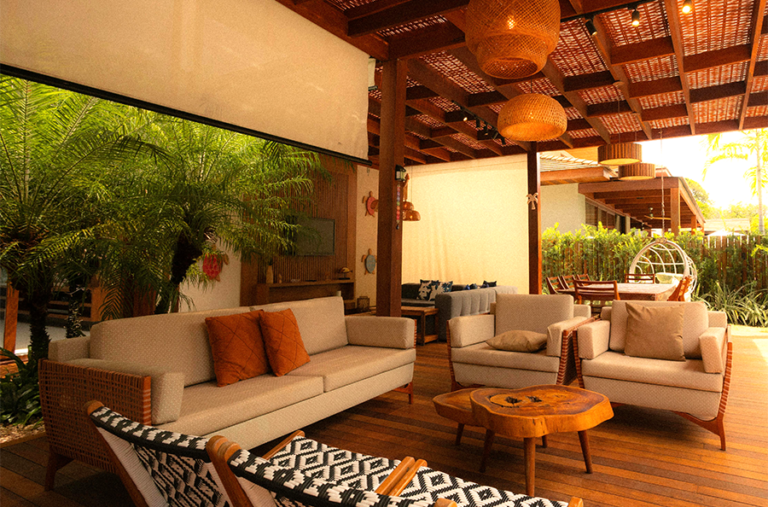
In Tampa Bay, this often extends outdoors. A well-designed patio or lanai frequently becomes more valuable than an extra indoor room that sits empty most of the year.
Flow Matters More Than Size
What people want now isn’t necessarily a bigger home—it’s a better one.
Flow has become more important than square footage.
How easily can you move through the space?
Do the rooms connect naturally?
Does the home feel open without feeling exposed?
In coastal environments like Tampa Bay, this often translates into open layouts, large sliding doors, and a strong connection between indoor and outdoor spaces.
When it works well, the home feels less like a series of rooms and more like a continuous experience.
Light Changes Everything
If there’s one element that consistently transforms a home, it’s light.
Natural light, in particular, has a way of making spaces feel larger, calmer, and more livable.
Homes that once felt perfectly fine can start to feel closed-in over time, especially when compared to brighter, more open environments.
That’s one reason homes with large windows, higher ceilings, and open exposure have become so desirable—particularly in Florida, where sunlight is part of everyday life.
Comfort Over Show
Another shift is the move away from impressing others toward creating personal comfort.
Earlier in life, homes are often designed with a certain level of presentation in mind. How it looks to guests. How it compares.
After 50, that tends to fade.
The focus becomes:
Is it comfortable?
Is it easy?
Do I enjoy being here?
That might mean better furniture instead of more furniture. Softer lighting. Materials that feel good rather than just look good.
Designing for the Future—Without Feeling Like It
There’s also a practical layer that begins to influence decisions.
Wider hallways. Fewer stairs. Walk-in showers. First-floor living.
These features are often associated with aging, but the best designs incorporate them so seamlessly that they simply feel like good design.
A home that’s easier to live in now also happens to be one that works well later.
The Tampa Bay Factor
Location plays a role in all of this.
In Tampa Bay, homes are shaped by climate and lifestyle in ways that naturally support these trends.
Outdoor living isn’t optional—it’s expected. Covered patios, ceiling fans, shaded seating areas, and outdoor kitchens become extensions of the home.
Materials need to handle humidity and heat. Layouts need to allow airflow. Spaces need to feel comfortable year-round.
The result is a style of living that’s both relaxed and intentional.
A Home That Works With You
Ultimately, the shift isn’t about downsizing or upgrading—it’s about alignment.
A home that fits your life.
A space that supports how you actually live.
An environment that feels good, not just looks good.
For many people, this becomes one of the most meaningful changes they make in this stage of life.
Because when a home truly works, you feel it every day.
And once you experience that, it’s very hard to go back.