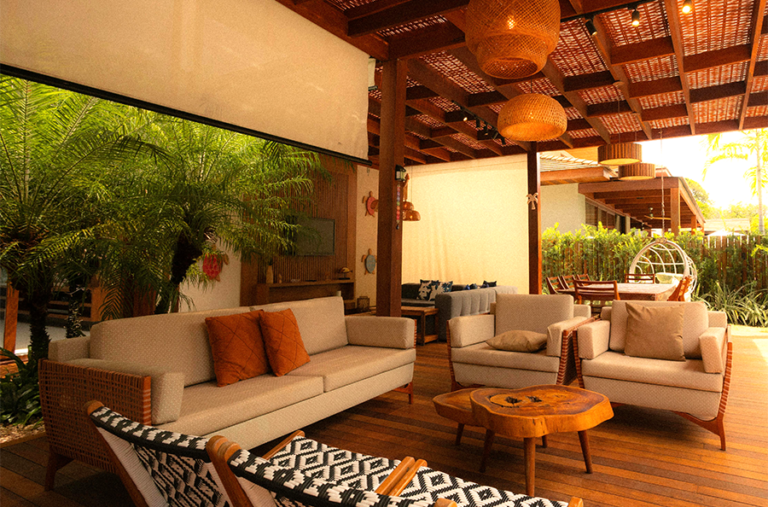

If you spend enough time in Tampa Bay, you start to notice something.
The most important room in the house… isn’t always inside it.
It’s the one just beyond the glass.
The one with the ceiling fan turning slowly overhead. The one where the light changes throughout the day. The one where mornings begin quietly and evenings stretch a little longer than planned.
Call it a patio. A lanai. A covered terrace. The name doesn’t matter.
What matters is how it changes the way you live.
The Shift You Don’t See Coming
Most people don’t plan for this room to become the center of their home.
It happens gradually.
A cup of coffee outside turns into a morning routine. A casual dinner becomes something you prefer to eat outdoors. A quiet place to sit becomes where you end most evenings.
And then one day, you realize:
You’re living out here.
Not occasionally—but regularly.
Why It Works Here
In many parts of the country, outdoor space is seasonal.
In Tampa Bay, it’s foundational.
The climate allows for a kind of everyday access to the outdoors that changes how homes function. You don’t need a special occasion to use the space. You don’t need to plan around it.
It’s just there—available, comfortable, inviting.
But not all outdoor spaces are equal. The ones that truly become part of daily life share a few things in common.
It Starts With Shade
The difference between a space you visit and a space you use comes down to comfort.
And in Florida, comfort starts with shade.
A covered structure—whether it’s a screened lanai, a deep overhang, or a pergola—turns outdoor space into something usable for hours, not minutes.
Add a ceiling fan, and suddenly the air moves just enough to take the edge off the heat.
That’s when the space begins to work.
Then It Becomes a Room
The next shift is subtle, but important.
Furniture changes everything.
Not plastic chairs or temporary seating—but real furniture. Cushioned seating. A table that invites you to sit down and stay awhile. Lighting that makes the space usable after the sun goes down.
At that point, it stops feeling like “outside.”
It starts feeling like another room.
One you actually want to be in.
The Kitchen Moves Out There
In many Tampa Bay homes, the outdoor space doesn’t just support living—it supports entertaining.
Grills evolve into full outdoor kitchens. Prep space expands. Refrigeration appears. What started as a place to cook occasionally becomes a place to gather.
And something interesting happens when meals move outside:
They slow down.
There’s less urgency. More conversation. Fewer distractions.
Dinner becomes less about eating and more about being together.
The Light Does the Rest
One of the things no interior designer can replicate is natural light.
The way it shifts across a space throughout the day. The way it softens in the evening. The way it reflects off water, walls, and surrounding greenery.
In Tampa Bay, where sunsets are part of the rhythm of life, this becomes one of the most valuable features of any home.
A well-positioned outdoor space doesn’t just give you more room—it gives you better moments.
Why This Matters More Now
Earlier in life, homes tend to be organized around function.
Bedrooms. Offices. Storage. Space for everything.
After 50, priorities shift.
The question becomes less about how much space you have and more about how that space feels.
Where do you actually spend your time?
Where do you feel most relaxed?
Where do conversations happen naturally?
More often than not, it’s outside.
Designing for How You Live
The mistake many homeowners make is treating outdoor space as secondary.
An add-on. A bonus. Something to improve later.
But in Tampa Bay, it’s often the opposite.
The outdoor space isn’t extra—it’s essential.
And when it’s designed intentionally, it becomes the most valuable square footage you have.
A Different Kind of Living
There’s a moment that happens in well-designed homes.
You’re sitting outside. The air is warm but comfortable. There’s a drink on the table. The light is starting to change.
And you realize you haven’t thought about anything else for a while.
No distractions. No urgency. Just presence.
That’s what this space creates.
Not just better design—but a better way of living.